





Buy your first ukulele and you quickly discover the instrument is only part of the picture. A handful of small accessories make the difference between an instrument that sits in a corner and one you actually pick up, keep in tune, and protect. The good news is that the list is short and inexpensive, and you do not need most of the gadgets that get bundled into overpriced starter kits.
Here is a clear rundown of the ukulele accessories that genuinely matter for a beginner, what each one does, and which ones you can safely skip.

The Essentials You Should Not Skip
A few items are close to non-negotiable, because they solve real problems every new player runs into in the first week.
A Clip-On Tuner
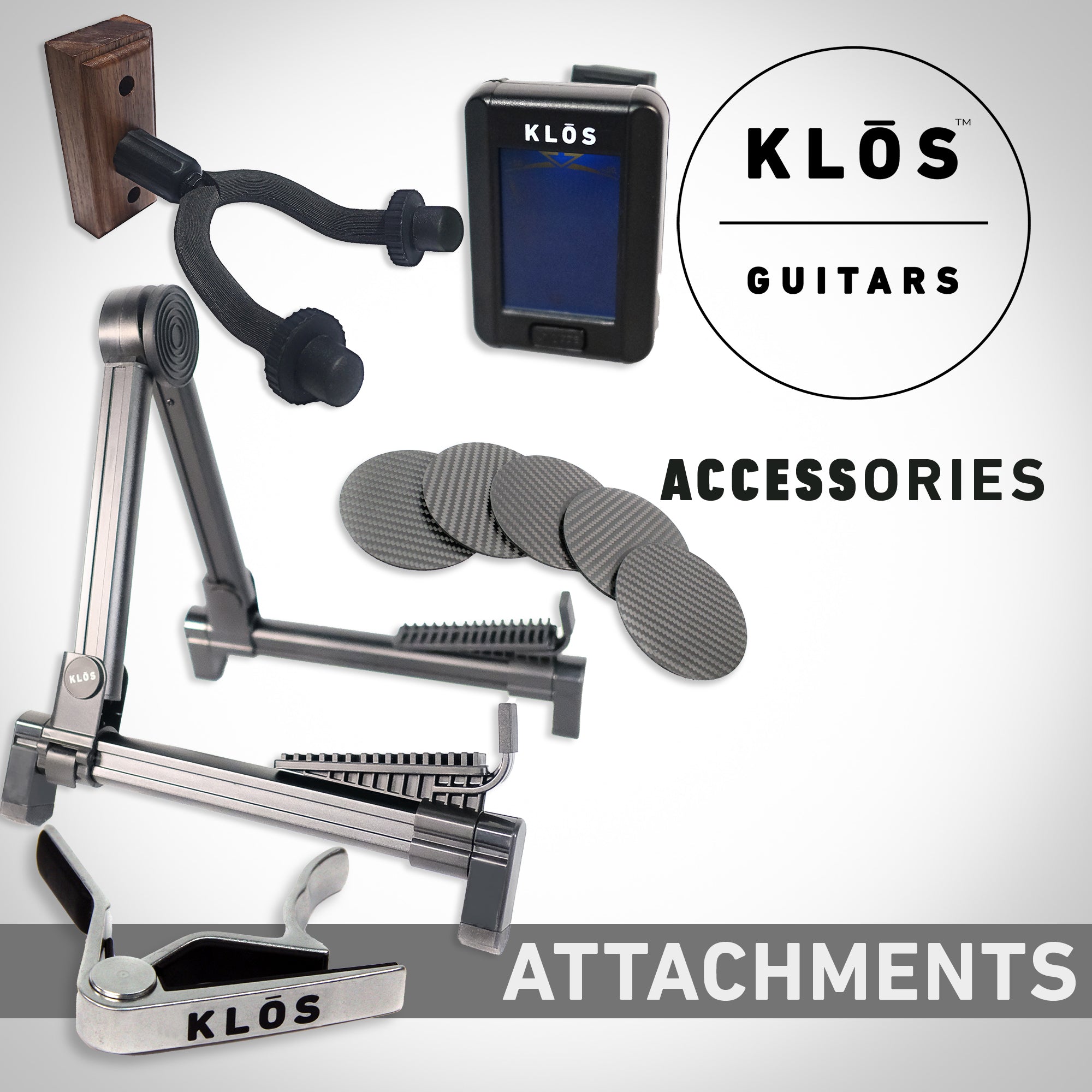
If you buy one accessory, make it a tuner. A ukulele that is out of tune sounds wrong no matter how well you play, and for a beginner that is discouraging exactly when encouragement matters most. A clip-on tuner clamps to the headstock and reads the string's vibration directly, so it works even in a noisy room and gets you in tune in seconds. The KLŌS clip-on tuner does the job quickly and lives right on the instrument so it is always there when you need it. Phone tuning apps work in a pinch, but they rely on the microphone and struggle anywhere with background noise, which is why a dedicated clip-on is the more reliable everyday tool.
A Case or Gig Bag
Your ukulele needs somewhere safe to live and travel. A padded gig bag protects the instrument from knocks, dust, and the bumps of being carried around, and it makes the uke easy to grab and take with you, which matters because an instrument you can transport is an instrument you actually play. A good bag is cheap insurance against an expensive drop. Every full carbon KLŌS ukulele actually ships with a backpack-style gig bag built from tough, camping-grade material, so it is ready for the road from day one, but whatever instrument you own, protecting it is worth the small cost.
A Spare Set of Strings
Strings wear out and occasionally break, and they never seem to fail at a convenient time. Keeping a spare set on hand means a broken string is a minor pause rather than a trip to the shop, and having them ready encourages you to swap dull strings for fresh ones when the tone starts to fade. A backup set is one of the cheapest, most useful things in any player's case.

The Nice-to-Haves That Genuinely Help
Beyond the essentials, a few accessories are not strictly required but make playing more comfortable and more fun. Add these as you go.
A Strap
Ukuleles are small and light, which fools people into thinking a strap is unnecessary, but many players find that supporting the instrument with a strap frees both hands to focus on playing rather than gripping. It is especially helpful when you stand up to play or perform. If you find yourself clutching the uke to keep it from slipping, a strap will make everything feel easier.
A Capo
A capo clamps across the fretboard and raises the pitch of all the strings at once, which lets you play the same easy chord shapes in a different key. That makes it a simple way to match a song to your singing voice without learning new chords, so it is a genuinely useful tool once you start playing songs. A well-made trigger capo clamps on and off in a second and sits neatly on the headstock when you are not using it.
Felt Picks and Learning Resources
Most ukulele players use their fingers, but a soft felt pick can give you a slightly different, rounder tone if you want to experiment, and they cost almost nothing to try. Far more important than any pick is a way to learn: a good beginner method book, a well-reviewed app, or a video course gives your practice direction and keeps you progressing instead of guessing. Learning resources are the accessory most likely to keep you playing, so do not overlook them.
What You Can Usually Skip
Plenty of starter kits pad out the price with things you do not need, so it helps to know what to ignore. A stack of cheap plastic picks, novelty straps, and low-quality bundled tuners rarely add value, and a very cheap all-in-one kit often spends its money on accessories while cutting corners on the instrument itself, which is exactly backwards.
There is one accessory worth calling out specifically, because whether you need it depends entirely on your instrument: a humidifier. A wood ukulele needs humidity control, a small in-case humidifier and sometimes a hygrometer to monitor it, because dry air can crack a wood top and shifting moisture pushes the instrument out of tune. That is a real, ongoing piece of gear for wood owners. A carbon fiber ukulele skips it entirely. Because carbon fiber does not absorb moisture, it does not crack, warp, or drift with humidity, so a Full Carbon Concert Ukulele needs no humidifier, no hygrometer, and no seasonal fuss. For the cleaning side, a simple maintenance cloth is all it asks. That is one less accessory to buy and one less thing to remember.

Putting Your Kit Together
You can outfit yourself as a new ukulele player for very little. Start with the three essentials: a clip-on tuner so you always sound right, a gig bag so your instrument stays safe and travels easily, and a spare set of strings so a break never stops you. Add a strap and a capo when you are ready for a little more comfort and flexibility, and invest in real learning resources, because those are what actually keep you improving.
Skip the bundled junk, and let the accessory list follow your playing rather than lead it. Buy the instrument you love first, add the few things that genuinely help, and you will have everything you need to keep the ukulele in your hands and in tune.


Leave a comment