






The fretboard is the part of the guitar your fingers actually live on. It is the thin playing surface glued or bolted to the front of the neck, holding the frets and taking the wear from thousands of hours of playing. Yet most players pick a guitar without ever thinking about what that surface is made of, and the material makes a real difference in feel, upkeep, and how the guitar reacts to weather.
There is no single best fretboard material. Each one has a personality, a set of tradeoffs, and a look. This guide walks through the four most common fretboard woods, plus the composite and carbon fiber options that behave differently from wood entirely, so you can match the surface to how you actually play.
Let's start with the brightest and most familiar one.
Maple: Bright, Fast, and On Display
Maple is a pale, dense, tight-grained wood, and on a fretboard it almost always wears a finish. That sealed, glossy or satin coat is the giveaway. Run your finger down a maple board, and you are touching lacquer, not bare wood, which gives it a slick, fast feel that many players love for quick runs.
Because it is finished, maple is easy to wipe clean, and it resists grime and sweat well. The finish is also what protects it from humidity, since the wood underneath is sealed away from moisture in the air.

The tradeoff is cosmetic and long-term. Maple shows dirt and wear plainly, especially on lighter finishes, and heavily played spots can develop worn patches in the finish over years. Tonally, players often describe maple as bright and snappy with a quick attack, though the effect on a solidbody electric is subtle compared to feel and playability. If you like watching your fretboard age and you want a fast, sealed surface, maple delivers.
Rosewood: Warm, Open, and Traditional
Rosewood is the classic dark fretboard, and for good reason. It is an oily, porous hardwood, usually left unfinished so you feel the bare wood and its natural texture under your fingers. That open grain has a slightly grippy, organic feel that a lot of players find comfortable, especially for bending and vibrato.
Because rosewood is naturally oily, it handles the sweat and moisture of regular playing gracefully and does not demand a finish to survive. It does like an occasional drink, though. Wiping a little fretboard oil into a rosewood board a couple of times a year keeps it from drying out and helps it stay dark and smooth.

Rosewood responds to humidity because it is unfinished and porous, so it takes on and releases moisture as the seasons change. In very dry air, it can shrink slightly, which sometimes leaves the fret ends feeling sharp at the edges of the board. Tonally, it is often described as warm and rounded, softening the attack a touch. It is the middle-of-the-road choice: comfortable, forgiving, and traditional.
Ebony: Dense, Smooth, and Premium
Ebony is the dark horse that guitar builders reach for on higher-end instruments. It is extremely dense and hard, with a fine grain that can be almost jet black, and it is typically left unfinished like rosewood. The difference is the surface: ebony is so tight and smooth that it feels glassy under the fingers, closer to a finished board than to open-grain rosewood.
That density makes ebony durable and gives it a crisp, articulate feel that fast players prize. It resists wear well and looks striking, which is a big part of why it shows up on premium builds.

Ebony has one quirk worth knowing: because it is so dense and holds internal tension, it can be more prone to cracking or checking in extreme dryness than softer woods. It benefits from occasional oiling and stable humidity. Tonally, players often describe it as bright and precise with a clear attack, a bit like maple but on a bare, dark surface. If you want a smooth, fast, premium feel and you can keep humidity in check, ebony is hard to beat.
Pau Ferro: The Sensible Middle Ground
Pau ferro sits between rosewood and ebony in most ways, and it has become common as a rosewood alternative. It is a dense hardwood with a tighter grain than rosewood, usually medium to dark brown with attractive streaking, and it is left unfinished.
The feel splits the difference nicely. It is smoother and harder than rosewood but not quite as glassy as ebony, so it suits players who want a firm, fast board without going all the way to ebony. Its higher density also makes it a touch more stable in humidity swings than open-grain rosewood, and it needs only light occasional oiling.
Tonally, pau ferro tends to land between the warmth of rosewood and the brightness of ebony, with a clear attack and a slightly tighter low end. It is a practical, good-looking choice that many modern guitars use, and most players are perfectly happy on it.
Composite and Carbon Fiber: Off the Wood Chart Entirely
Composite fretboards, including carbon fiber and resin-based materials, are a different animal. Instead of a natural wood surface that varies board to board, a composite fretboard is engineered to a consistent spec, and its headline trait is that it does not respond to humidity the way wood does.
Wood is a natural material, so every wood board on this list takes on and releases moisture as the air changes through the seasons. That is what causes shrinking fret ends, shifting relief, and the twice-a-year setup dance. A composite surface skips most of that. Carbon fiber does not absorb moisture, so it holds its dimensions and its feel whether the room is humid in July or bone dry in January.
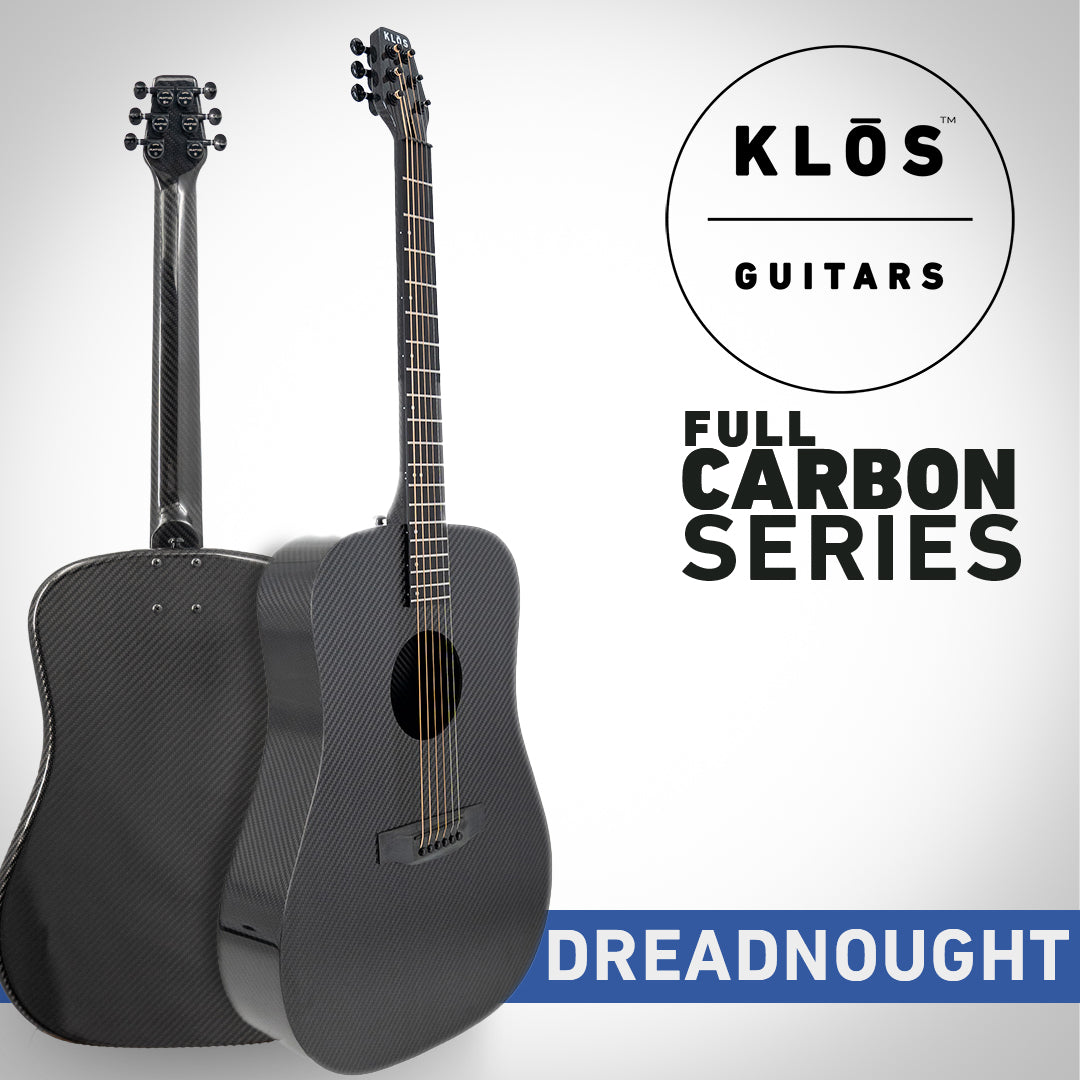
The feel is smooth and consistent, often compared to a fast-finished board, and it never needs oiling because there is no porous grain to dry out. This stability is where a carbon fiber neck earns its keep. The KLŌS F-Series Electric Neck uses a carbon fiber build that bolts onto a standard Stratocaster, Telecaster, or Jazzmaster body and stays dimensionally stable across seasons, which means the setup you dial in tends to stay put. For bass players, the F-Series Bass Neck brings the same behavior to Precision and Jazz bodies. It is the choice for players who would rather practice than chase the weather.
Matching the Surface to the Player
None of these materials is a mistake. Maple gives you a slick, sealed, bright surface that ages visibly. Rosewood offers warm, open-grain comfort with a little upkeep. Ebony is the dense, smooth, premium pick. Pau ferro splits the difference sensibly. Composite and carbon fiber trade the character of natural grain for consistency that ignores the seasons.
Think about how you play, where you play, and how much setup fuss you are willing to tolerate. A player in a stable climate who loves traditional feel might land on rosewood or ebony without a second thought. A gigging player hauling gear between a dry green room and a humid stage might get more mileage out of a surface that does not care about either. Pick the fretboard that fits your hands and your life, and the guitar will reward you for it.


Leave a comment