





A guitar that is out of tune is discouraging to play, especially when you are starting out, because every chord sounds wrong even when your fingers are doing everything right. So one of the first tools any player reaches for is a tuner. These days that usually means one of two things: a small clip-on tuner that clamps to your headstock, or a free app on your phone.
Both will get your guitar in tune. But they work differently, and each has situations where it clearly wins. Here is how to think about a clip-on versus an app for your acoustic guitar tuner, so you can pick the one that fits how and where you play.

How each one actually "hears" your guitar
The key difference is not the screen. It is how the tuner detects the note.
A clip-on tuner reads vibration. It clamps onto the headstock and senses the string's vibration directly through the wood or carbon fiber, then shows you the pitch. Because it is feeling the guitar rather than listening to the air, it ignores noise around it almost completely.
A phone app uses the microphone. It listens to the sound coming out of the guitar through the air, the same way your ear does. That works beautifully in a quiet room, but it also means the app hears everything else in the room too.
That single distinction, vibration versus microphone, explains almost every practical difference between the two.
Where the clip-on wins
The clip-on tuner's vibration sensing gives it one enormous advantage: it works in noisy places. A jam session, a busy music store, a campfire with people talking, a backstage area before a set. Because it only feels your guitar's vibration, background noise does not throw it off. A microphone-based app, by contrast, struggles the moment the room gets loud, because it cannot tell your low E string from the conversation next to you.
Clip-on tuners are also always ready. There is no app to open, no notification to dismiss, no battery on your phone to drain. You flick it on, tune, and flick it off. For a lot of players, that speed and reliability is the whole appeal, which is why you see clip on tuners living permanently on so many headstocks.
The one honest downside is that it is one more small object to own and occasionally to replace a battery in. But it is cheap, light, and built for exactly one job it does very well.
Where the app wins
The app's biggest strength is that it costs nothing and it is already in your pocket. If you are a brand new player who wants to tune up tonight without buying anything, a free tuning app is a completely reasonable starting point, and the good ones are accurate in a quiet room.
Apps often pack in extras too, like alternate tunings, a metronome, and ear training tools, so one download can do several jobs. For a beginner practicing alone at home, that bundle of features at no cost is genuinely useful.
The catch is the microphone. In any noisy environment, the app gets confused, and it depends on your phone being charged and handy. It is a great tool in the right setting and a frustrating one in the wrong one.
Which should you choose?
For pure convenience at home and zero cost, start with an app. For reliability anywhere, especially if you ever play with other people, in stores, outdoors, or on the go, a clip-on tuner is the more dependable everyday tool. Many players end up using both, an app as a backup and a clip-on as the daily driver, and there is nothing wrong with that.
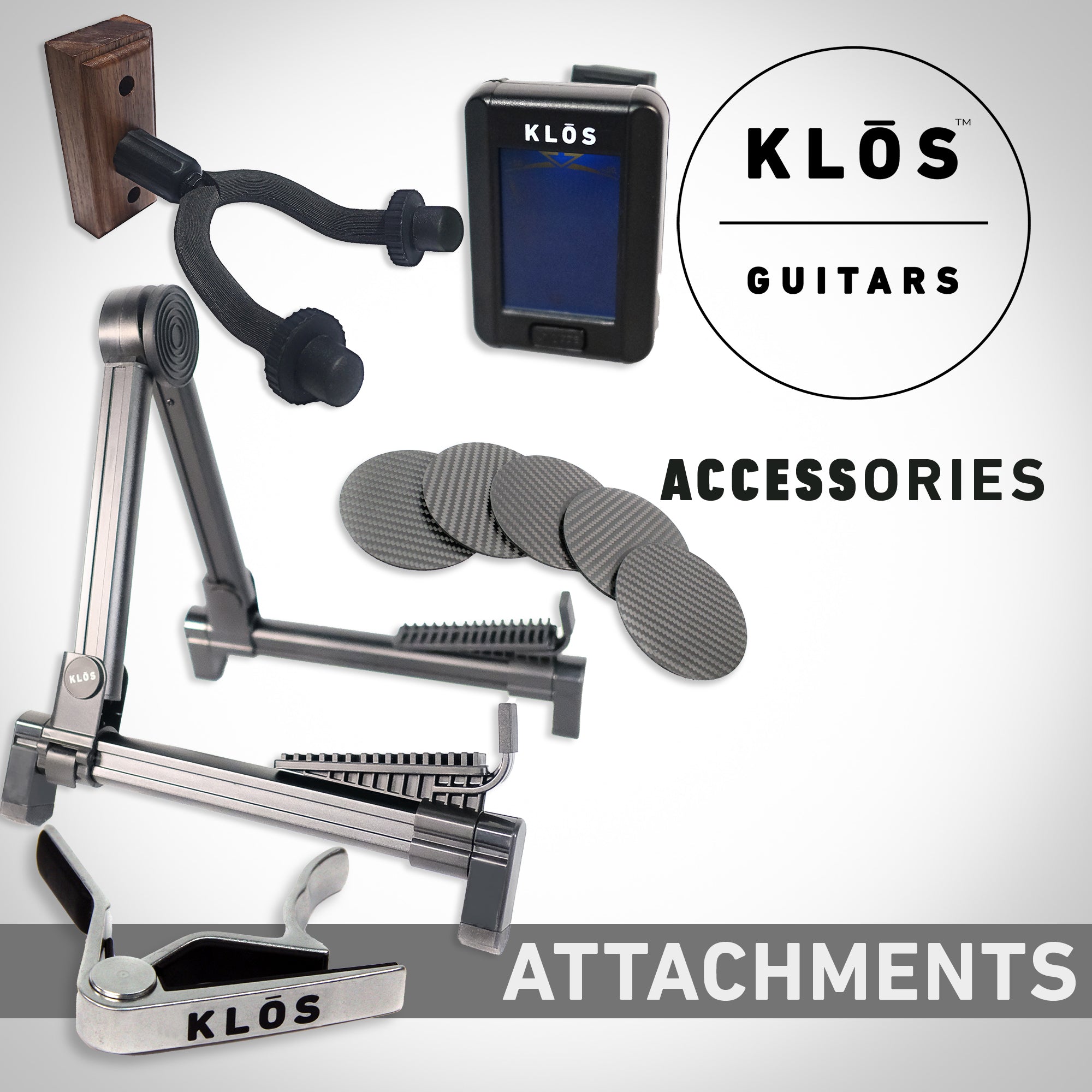
If you want a clip-on that is built for guitar and easy to read at a glance, the KLŌS clip-on tuner clamps on, reads your string's vibration, and gets you in tune in seconds, noisy room or not.

A note on staying in tune
Whichever tuner you choose, it is worth understanding why a guitar drifts out of tune in the first place, because the tool only fixes the symptom. New strings stretch for the first little while and will go flat between sessions until they settle, so expect to retune often when strings are fresh. Temperature and humidity matter too. On a wood guitar, the body and neck move slightly as conditions change, and that movement nudges the strings out of tune, which is part of why wood guitars need regular retuning.
This is one area where the instrument itself makes a difference. A carbon fiber guitar does not move with humidity the way wood does, so it holds its tuning noticeably better between sessions. The strings still settle in when they are new, but you are not also fighting the body shifting underneath them. A guitar like the KLŌS Travel Guitar tends to stay in tune longer simply because there is no wood reacting to the weather. Pair stable tuning with a quick, reliable tuner, and getting in tune stops being a chore at all.
The takeaway
Both a clip-on tuner and a phone app will keep your acoustic guitar in tune, and the right pick depends on where you play. Apps are free, feature-rich, and great in a quiet room. Clip-on tuners are fast, always ready, and unbothered by noise, which makes them the more reliable choice for real-world playing. Get one you trust, tune up every time you play, and you will never sour a practice session with a guitar that just sounds wrong.




Leave a comment