




Walk into the ukulele world for the first time and you hit a wall of names almost immediately. Soprano, concert, tenor, baritone. They look like the same instrument shrunk and stretched, and in a way they are. The two that trip people up most are the tenor and the baritone, because they sit at the big end of the family and they play by different rules.
Here is the short version. A tenor ukulele sounds like the ukulele you picture in your head, bright and cheerful. A baritone ukulele sounds warmer and deeper, closer to a small acoustic guitar. They are tuned differently, they suit different players, and picking the wrong one for your goals can cost you weeks of frustration.
Let me walk you through the real differences so you can buy once and buy right.
The Size Difference You Can Feel
Ukuleles come in four main sizes, and it helps to picture them next to something familiar. A soprano is about 21 inches long, roughly the length of a school ruler and a half. A concert runs about 23 inches. A tenor stretches to around 26 inches. A baritone tops out near 30 inches, which puts it in the same neighborhood as a small acoustic guitar body.
That extra length matters for your hands. The tenor gives you more room between frets than a soprano or concert, so if you have larger fingers or you plan to play lots of chords up the neck, the spacing feels friendlier. The baritone gives you even more room, which is one reason guitar players gravitate toward it.
When people ask what the biggest ukulele size is, the baritone is the answer among the four standard shapes. It is the largest of the common ukulele sizes, and the longer scale length (the distance from the nut to the bridge where the strings vibrate) is exactly what produces its deeper voice.

Tuning Is the Real Dividing Line
Size is easy to see. Tuning is where these two instruments genuinely part ways, and it is the single most important thing to understand before you buy.
A tenor ukulele uses standard GCEA tuning. That means the four strings, from the one closest to your face down to the one closest to the floor, are tuned to the notes G, C, E, and A. Most tenors ship with a high-G, which is called re-entrant tuning. Re-entrant simply means the strings are not ordered low to high the way you would expect. That high fourth string is what gives the ukulele its signature bright, jangly ring.
A baritone ukulele uses DGBE tuning instead. The strings are tuned to D, G, B, and E, which is the exact same tuning as the top four strings of a guitar. Nothing re-entrant about it. The strings run low to high in a straight line, and the whole instrument sits lower in pitch than a tenor.
This one difference changes everything downstream: the chord shapes you learn, the sound you get, and who the instrument suits best.

How They Actually Sound
Tuning matters, but tone is what you fall in love with. A tenor delivers the classic ukulele sound with a little more body and sustain than its smaller cousins. Sustain is how long a note keeps ringing after you pluck it. The tenor holds notes longer than a soprano, so strummed chords bloom, and fingerpicked melodies stay clear. It is bright without being thin.
A baritone trades that brightness for warmth. Because the strings are longer and pitched lower, the notes come out rounder and fuller, with more low end. Play a simple chord on a baritone, and it sounds mellow and mature, almost jazzy. Fingerstyle players and singer-songwriters often prefer it for that reason.
Neither is better. They are aimed at different feelings. If you want the sunny, plinky sound that says ukulele the instant you strum, go tenor. If you want something that sounds like a cozy campfire guitar with fewer strings, go baritone.
Who Each One Suits
The tenor is the sweet spot for most players, and it is the size I point beginners toward most often. It is small enough to travel and hold comfortably, big enough that adult hands do not feel cramped, and it uses the standard GCEA tuning that nearly every ukulele tutorial, songbook, and chord chart is written for. Learn on a tenor and the entire ukulele universe opens up with no translation needed.
The baritone suits a few specific people. If you already play guitar, the DGBE tuning means you can pick it up and play familiar shapes right away, since the strings match your guitar's top four. If you have a lower singing voice, the baritone's deeper register may sit better under your vocals. And if you love a warm, laid-back tone over a bright one, the baritone delivers it naturally.
The one catch worth naming: most beginner ukulele resources assume GCEA. A baritone player has to hunt a little harder for lessons and chord charts written in DGBE. It is not a dealbreaker, just something to know before you commit.

The Guitarist Crossover
Guitar players deserve their own paragraph here, because the choice looks different from where they sit.
If you play guitar and you want the fastest possible on-ramp, the baritone is a gift. Those top four strings are already in your muscle memory. A G chord, a C chord, a D shape, they all transfer directly. You will be playing songs in minutes, not weeks.
But there is a reason many guitarists still choose a tenor. Learning the GCEA tuning forces you to think fresh, and it unlocks the true ukulele sound and the enormous library of uke-specific songs. Plenty of guitarists own both: a baritone for easy, warm noodling and a tenor for that classic island ring. If you can only buy one and you want it to feel like a ukulele rather than a shrunken guitar, the tenor wins.
Where Build Quality Comes In
Whichever tuning you land on, the material your ukulele is made from decides how it holds up and how often you reach for a tuner. Traditional wood ukuleles react to their environment. Heat, humidity, and dry air make the wood swell and shrink, which pushes them out of tune and, over years, can lead to warping or cracking.
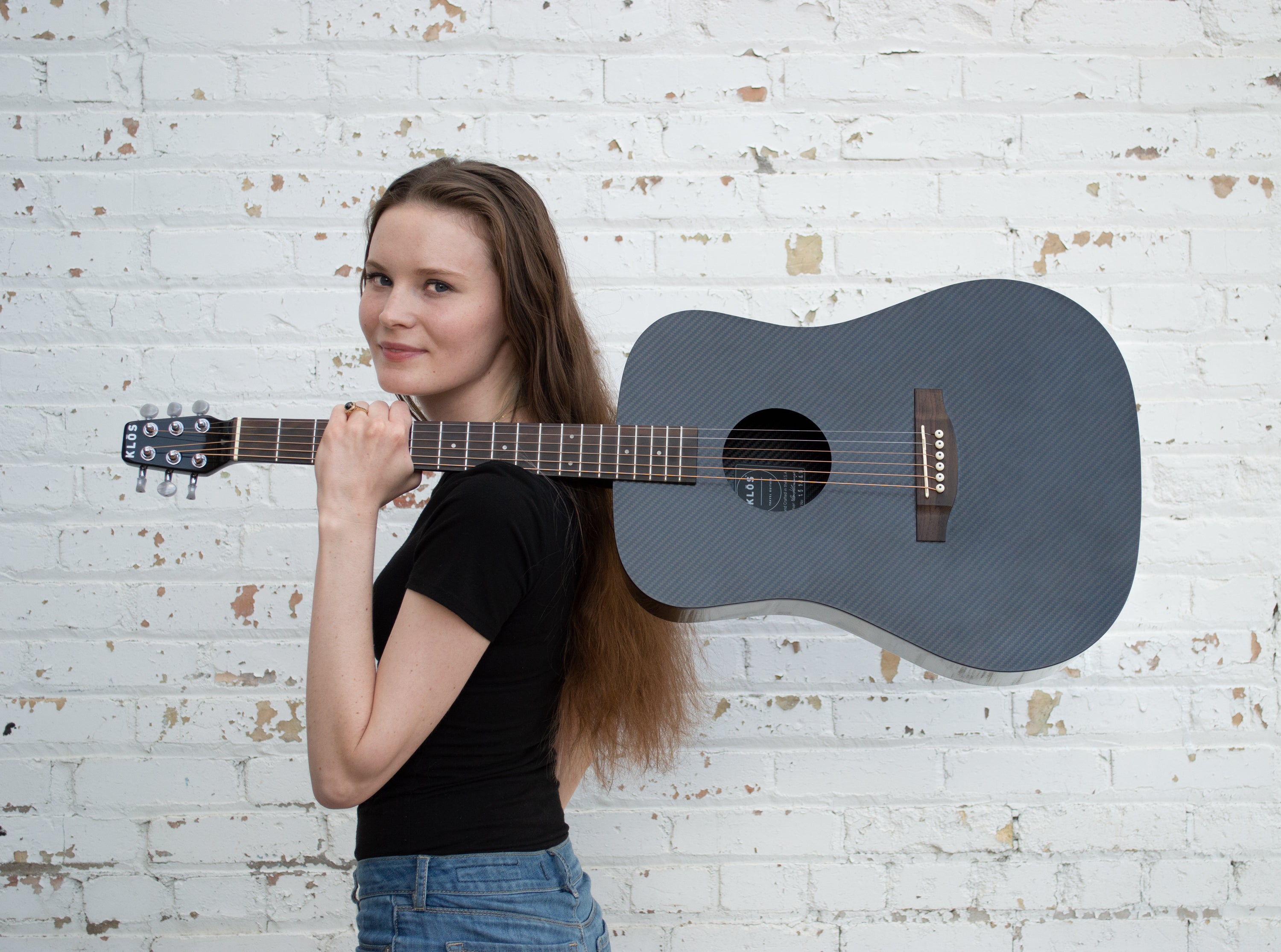
This is where carbon fiber changes the math. The KLŌS carbon fiber tenor ukulele is built to ignore heat and humidity, so it holds its tuning far better than wood and will not warp or crack when you take it to the beach, on a flight, or into a dry mountain cabin. If the baritone's warm voice is calling you, the KLŌS carbon fiber baritone ukulele offers that same deep DGBE tone in a body designed to survive the places wood instruments fear. Both arrive PLEK-set up to professional standards, which means the string height and playability are dialed in before the instrument ever reaches you.
Travelers, beach players, and anyone living in a humid or bone-dry climate get the most obvious benefit, since a stable instrument is one you actually play instead of constantly babysitting.
So, Which One?
Here is the honest summary. Buy the tenor if you want the classic ukulele sound, standard GCEA tuning, and the easiest path to every tutorial and songbook out there. It is the safe, joyful default for most beginners.
Buy the baritone if you already play guitar, you sing lower, or you simply love a warm, deep tone and do not mind that fewer beginner resources are written for it.
There is no wrong answer, only the one that fits the sound in your head and the way you want to play. Pick that, get it set up well, and start strumming.
---


Leave a comment