





A mandolin is a wonderfully self-contained little instrument. You can pick one up and make music with nothing but your two hands. But a handful of well-chosen accessories will keep it protected, keep it in tune, and make every practice session smoother, and none of them cost a fortune.
The tricky part for a new player is sorting the genuinely useful gear from the pile of gadgets that gather dust in a drawer. You do not need everything the internet tries to sell you. You need a short, sensible kit that solves real problems.
Here are the seven mandolin accessories that earn their place for almost every player, from your first week to your hundredth gig, and why each one matters.
1. A Clip-On Tuner
An out-of-tune mandolin sounds bad no matter how well you play, and with eight strings to manage, tuning by ear alone is a tall order for a beginner. A good mandolin tuner solves that instantly.
A clip-on tuner attaches to your headstock and reads the pitch through the instrument's vibrations, so it works even in a noisy room where a microphone-based tuner would struggle. You pluck a string, glance at the display, and turn the peg until the needle sits in the middle.
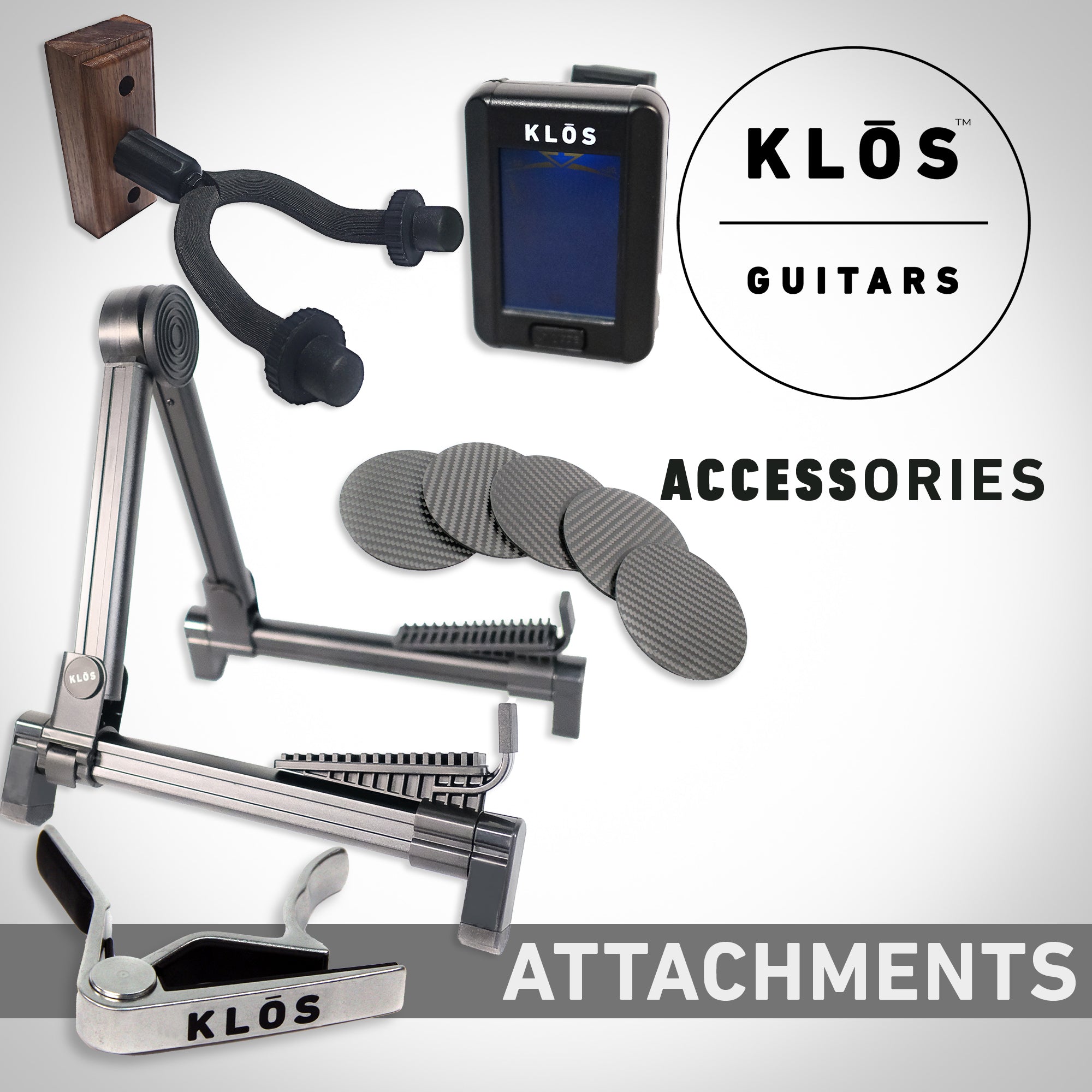
The KLŌS Clip-on Tuner is a simple, reliable pick for exactly this job, and it clips on and off in a second so you can tune up before you play and get right to it. Keep one on your headstock or in your case, and you will never wonder whether you are in tune again.
2. A Case or Gig Bag
Your mandolin needs protection the moment you carry it anywhere, and even at home, a case guards against knocks, dust, and curious pets. This is the accessory that quietly saves you from expensive repairs.
A hard case offers the most protection and is worth it if you travel or fly, absorbing the bumps that would crack a lesser-protected instrument. A padded gig bag is lighter and easier to sling over your shoulder for a walk to a friend's house or a local jam, trading some armor for convenience.
Match the case to your instrument's body shape, since an A-style and an F-style mandolin have different outlines and need a case cut to fit. Whichever you choose, a snug fit that keeps the instrument from sliding around is what actually protects it.

3. A Strap
A strap sounds optional until you try to play standing up, and then it becomes essential. Even sitting down, a strap steadies the instrument so your fretting hand is free to move rather than holding the mandolin in place.
A good mandolin strap takes the weight off your hands entirely, which lets you relax your shoulders and play longer without fatigue. That relaxed posture also improves your technique, because tension in your hands is the enemy of clean, fast playing.
Look for a strap with a bit of width to spread the load and a secure attachment at both ends. Mandolins can be strapped in a few different ways depending on the instrument's hardware, so check where your strap buttons are before you buy.
4. Picks
The mandolin is almost always played with a pick, and the pick you choose shapes your tone and attack more than most beginners realize. This is the cheapest accessory on the list and one of the most influential.
Mandolin picks tend to be thicker and more rigid than typical guitar picks, because a stiff pick delivers the crisp, punchy attack the instrument is known for. Many players favor a rounded teardrop shape and a thickness around 1 millimeter or more, though the sweet spot is personal.
Buy a small variety pack and experiment. Picks are inexpensive enough that trying several thicknesses and materials costs almost nothing, and finding the one that feels right under your fingers is a genuine upgrade to your sound.
5. Extra Strings
Strings break, usually at the least convenient moment, and they also wear out and go dull over time. Keeping a spare set on hand means a snapped string never ends your practice or your performance.
A fresh set restores the bright, ringing tone that fades as strings absorb oil and grime, so even without a break you will want to change them periodically. Most players keep at least one backup set in their case at all times.
For reference, KLŌS mandolins ship with D'Addario XS Phosphor Bronze strings in an 11 to 40 gauge, a warm and durable choice that suits most styles, and matching your spares to a set you already like keeps your tone consistent from one change to the next.
6. A Humidifier for Wood Instruments
Here is one accessory whose necessity depends entirely on what your mandolin is made of. If you own a wood mandolin, a humidifier is not optional in a dry climate.
Wood swells when the air is humid and shrinks when it is dry, and in a dry winter room that shrinkage can crack the top or pull the instrument badly out of tune. A small case humidifier holds a stable moisture level around the wood and prevents that damage, and wood players monitor humidity closely all year.
Carbon fiber changes this equation completely. Because it does not absorb moisture, a carbon fiber mandolin ignores humidity swings entirely and never needs a humidifier or seasonal adjustment, which is one less thing to buy, monitor, and worry about. If a maintenance-free instrument appeals to you, that stability is a real everyday convenience.
7. A Pickup or Preamp for Gigging
The day you want to play for more than a small room, you will need a way to amplify your mandolin, and that means a pickup and often a preamp. An acoustic mandolin is loud for its size but still gets buried in a full band or a large venue.
A pickup captures the instrument's vibrations and sends them to an amplifier or PA system, and a preamp shapes that signal with tone and volume controls so it sounds full and natural rather than thin. Together they let you fill a room without straining or losing your acoustic character.
The KLŌS Mandolin EQ Pre-Amp is built for exactly this, giving you onboard control over your amplified sound so you can dial in a clear, balanced tone on stage. If performing is anywhere in your future, this is the accessory that makes it possible.

Building Your Kit
You do not need to buy all seven at once. Start with a tuner and a case, because protection and pitch are non-negotiable from day one. Add a strap and picks as soon as you are playing regularly, since comfort and tone matter for daily practice.
Keep a spare set of strings in that case, add a humidifier only if you play a wood instrument, and reach for a pickup and preamp when you are ready to play for a crowd. Build the kit in that order, and every purchase will solve a problem you actually have.
The right mandolin accessories do not change the instrument. They just clear away the small frustrations so you can spend your time doing the only thing that matters, which is playing.


Leave a comment