





There is a moment every guitarist hits where they realize the shop charges real money for a setup, and the setup itself is mostly a handful of small adjustments anyone can learn. A setup means dialing in the neck, the string height, and the intonation so the guitar plays easily and stays in tune. You do not need a workbench full of gear to do it. You need about ten simple tools and a little patience.
The good news is that most of these tools are cheap, last forever, and pay for themselves after one or two visits you no longer have to make. Buy them once, keep them in a small kit, and you can tweak your action on a rainy Sunday instead of dropping the guitar off for a week.
Here are the ten guitar setup tools worth owning, roughly in the order you reach for them during a basic setup, with a note on what each one actually does.

1. Truss Rod Wrench
The truss rod is the metal rod that runs inside the neck and controls relief, meaning the slight forward bow the neck holds under string tension. The truss rod wrench is the tool that turns the adjustment nut at the end of that rod, and it is the first tool you reach for because relief is the foundation of a good setup.
Guitars use different sizes, often a specific hex or a socket type, so get the wrench that matches your instrument. Many guitars ship with the correct one, and losing it is the most common reason people stall out before they even start. A small turn goes a long way here, so move it a fraction at a time.
2. Feeler Gauges
A feeler gauge is a thin metal blade machined to a precise thickness, and they come in a fanned-out set of different thicknesses. You use them to measure tiny gaps, most importantly the gap between a string and a fret when you check relief. Slide the right blade into the gap for an exact reading instead of a guess.
This is the tool that turns setup from eyeballing into real measurement. Once you know your neck holds, say, a few thousandths of an inch of relief, roughly the thickness of a sheet or two of paper, you can repeat that setting every time.
3. A Capo
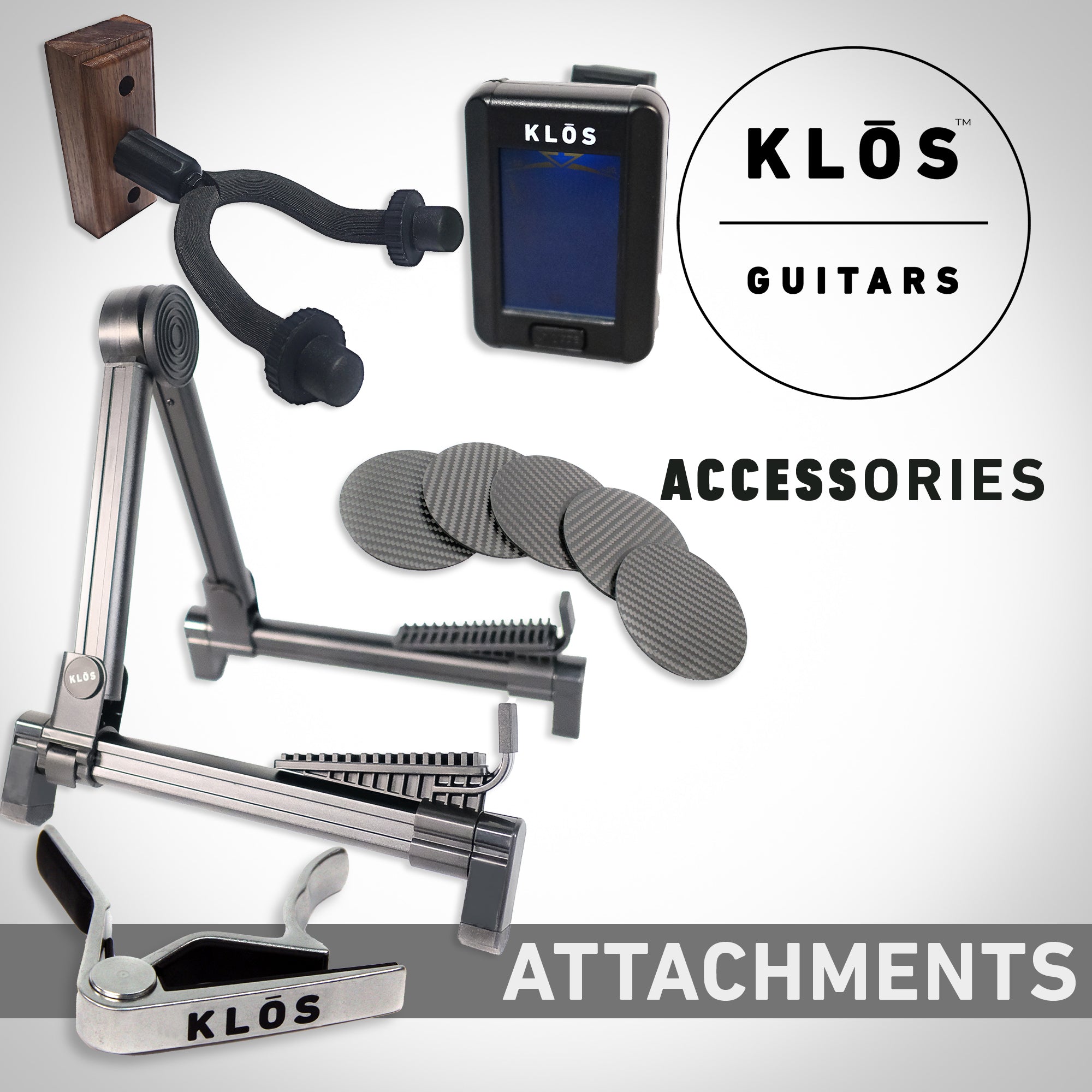
A capo clamps across the strings at a chosen fret. In a setup, it earns its place by holding all the strings down at the first fret while you measure relief at the middle of the neck, which frees up your hands and removes a variable. Outside of setup work, it is a songwriting and performance staple, so most players already own one.
It is a small, cheap tool that makes measuring relief far easier and more consistent. If you only buy the specialty tools and skip this one, you will wish you had it the first time you try to hold six strings and a feeler gauge at once.

4. A Ruler or String Action Gauge
String action is the height of the strings above the frets, and it is the single biggest factor in how easy a guitar feels to play. A precision ruler marked in small increments, or a dedicated string action gauge, lets you measure that height at the twelfth fret so you can set it on purpose rather than by feel.
The dedicated gauges are inexpensive and marked specifically for this, which makes them faster than squinting at a standard ruler. Either way, being able to measure action means you can find the height where the guitar plays easily without buzzing, then match it string to string.
5. Hex Keys
A set of hex keys, also called Allen wrenches, is the L-shaped, six-sided keys that turn the small set screws found all over a guitar. On many bridges, especially Fender-style ones, each saddle has tiny hex screws that raise and lower individual string height. Adjusting action often comes down to these screws.
Guitars mix metric and imperial sizes depending on where and when they were made, so a small set covering both saves a lot of frustration. Keep them together on a ring so you are not hunting for the one size you need.
6. Screwdrivers
A couple of good screwdrivers, one Phillips and one flat, cover a surprising amount of setup work. Many bridges adjust intonation, meaning the fine-tuning of scale length so notes play in tune up the neck, with a screw at the back of each saddle. Pickguards, tuners, and neck mounting screws all want a driver too.
The tip fit matters more than you think. A driver that is slightly the wrong size chews up the screw head and slips, so use one that seats fully in the slot. This is the least glamorous tool on the list and one of the most used.
7. A String Winder
A string winder is a simple crank that fits over the tuning peg and spins it many times faster than your fingers can. Since almost every setup starts with fresh strings, and changing strings means winding six pegs up and down, this little tool turns a tedious chore into a quick one.
Many winders include a notch that helps pop out bridge pins on acoustics, so they do double duty. It saves time and spares your wrist, which is reason enough to keep one in the case.
8. Nut Files or Gauged Files
Nut files are thin files sized to match specific string gauges, used to cut and shape the slots in the nut, the slotted piece at the top of the neck that holds the strings. If a slot is too high, the low frets feel stiff, and a well-fitted file lets you lower it precisely.
This is the most specialized tool on the list, and it rewards a careful hand because you cannot un-file a slot cut too deep. If you are starting, you might leave nut work to a tech at first, but a basic set of gauged files opens up one of the most impactful adjustments once you are comfortable.
9. A Fret Rocker
A fret rocker is a small flat tool with several precisely straight edges of different lengths. You set it across three frets at a time and gently rock it, and if it teeter-totters, one of those frets is high. It is how you find the exact frets causing buzz before you decide whether the neck needs work.
It costs very little and answers a question that otherwise takes guesswork: is that buzz a setup issue or a fret issue? Knowing the difference saves you from chasing the wrong fix for an afternoon.
10. A Tuner and a Cleaning Cloth
Every setup ends the same way, with tuning up and checking intonation, so a reliable tuner is not optional. A clip-on or pedal tuner lets you compare the open string to the note at the twelfth fret, which is how you confirm intonation is right. A soft cloth rounds out the kit, because a fresh set of strings and a wiped-down fingerboard is the reward at the end of the job.
Keep the tuner in the same kit as everything else so a setup is always one box away. Clean strings, correct intonation, and a quick polish are the small finish that makes the whole thing feel done.
A Note on What You Are Setting Up
All ten tools serve the same goal: a guitar that plays easily and holds its setup. That last part, holding the setup, is where the neck itself comes in. Wood necks move with humidity and temperature, so even a perfect setup drifts as the seasons change, and you find yourself back at the truss rod twice a year.
A carbon fiber neck sidesteps that. The F-Series Electric Neck from KLŌS is built from carbon fiber, a woven, resin-set material that stays dimensionally stable, so it holds its relief instead of warping with the weather. It bolts onto Fender-style Stratocaster and Telecaster bodies at the standard 25.5-inch scale and carries stainless steel frets that resist wear. Do your careful setup on a neck that refuses to move, and the numbers you dial in tend to stay put.
Build the kit once, learn to use each tool, and you gain a quiet kind of independence. Your guitar plays the way you want, whenever you want, no appointment required.


Leave a comment