





The mandolin has a reputation as a supporting instrument, the thing chopping away in the back of a bluegrass band. But across the last hundred years, a handful of players pushed it far past that role, dragging it into jazz, rock, classical, and pop, and proving that eight strings can carry a whole concert.
This is a tour through ten of the most famous mandolin players, roughly in order of when they made their mark. Some invented entire styles. Others took the instrument somewhere no one expected. Together they explain how a small folk instrument became something a serious musician can build a career on. If you play, or you are thinking about starting, these are the names worth knowing and the recordings worth hearing.
You do not have to like every genre here to learn from these players. Each one solved a different problem, and their solutions are still what teachers pass down today.

1. Bill Monroe
You cannot talk about the mandolin without starting here. Working from the 1940s onward, Bill Monroe more or less invented bluegrass, and his hard-driving, bluesy mandolin style set the standard for the genre. His band was even called the Blue Grass Boys, which is where the music got its name. Every bluegrass mandolin player alive is working in his shadow. He played a Gibson F-5, drove his band like a rhythm engine, and treated the mandolin as a lead voice at a time when few others did. If you learn only one player's approach, start with his recordings from the 1940s and 1950s.

2. Dave Apollon
Before bluegrass claimed the instrument, Dave Apollon carried the mandolin through the vaudeville and jazz world of the 1920s through the 1950s. Born in Ukraine and famous in America, he showed off a dazzling classical and jazz technique that reminded audiences the mandolin was a full virtuoso instrument rather than a folk toy.
3. Jethro Burns
Active from the mid-century onward, Jethro Burns was one half of the comedy duo Homer and Jethro, but serious musicians knew him as a brilliant jazz mandolinist. He is widely credited as a father of jazz mandolin, bringing sophisticated chords and improvisation to an instrument most people still filed under country.
4. Frank Wakefield
A wild, inventive player who came up in the 1950s and 1960s, Frank Wakefield pushed bluegrass mandolin into stranger and more adventurous territory than his peers. His original compositions and unpredictable style influenced the generation of progressive players who followed.
5. David Grisman
David Grisman built a whole genre and called it "Dawg music," his own blend of bluegrass, jazz, and swing that took shape in the 1970s. He proved the mandolin could lead an instrumental band outside bluegrass entirely, and his collaborations, including work with Jerry Garcia, introduced the instrument to rock and jam-band audiences. His acoustic quintet arrangements, built around the mandolin as the featured voice, showed a generation of players that they did not have to choose between technical skill and groove.
6. Sam Bush
Starting in the 1970s with the band New Grass Revival, Sam Bush earned the nickname "father of newgrass" for fusing bluegrass with rock and reggae rhythms. His aggressive, rhythmic playing and festival energy made him a hero to younger players who wanted the tradition to breathe and evolve. Decades later, he is still a fixture on festival stages, which tells you how durable that fusion turned out to be.
7. Ricky Skaggs
Ricky Skaggs bridged worlds. A child prodigy who went on to major country stardom in the 1980s, he later returned to his bluegrass roots and brought a huge mainstream audience with him. His clean, tasteful mandolin playing showed that traditional skill and commercial success could live together. When a country star with radio hits chooses to make a straight bluegrass record, it sends a signal, and Skaggs sent it clearly, helping spark renewed interest in the traditional style among listeners who had drifted away.
8. Mike Marshall
Emerging in the late 1970s and hitting his stride through the following decades, Mike Marshall is one of the most versatile mandolinists ever recorded. He moves easily between bluegrass, Brazilian choro, jazz, and classical, and his collaborations and teaching have shaped a whole generation of players. If you want to hear how far the instrument can stretch across styles, his catalog is a master class.
9. Chris Thile
If any living player is the face of the modern mandolin, it is Chris Thile. Rising to fame with Nickel Creek and then Punch Brothers in the 2000s, he plays bluegrass, classical, and pop with equal command, and he has recorded Bach's works for solo violin on the mandolin. A MacArthur "genius" grant recipient, he expanded the public's sense of what the instrument can do more than anyone in his generation. He also hosted a national radio variety show for a stretch, putting the mandolin in front of audiences who had never thought about it, and his tremolo technique on slow passages is a study in making a plucked instrument truly sing.
10. Sierra Hull
Sierra Hull represents where the instrument is heading. A former child prodigy who turned into one of the most respected mandolinists of the 2010s and beyond, she plays with a fluid, harmonically rich style and won multiple International Bluegrass Music Association awards for her work. She is proof that the tradition Bill Monroe started is very much alive and still growing. She also plays the mandola, a slightly larger cousin of the mandolin, and the family keeps expanding as new players push its edges.
What These Players Have in Common
Look across the list, and a pattern shows up. The mandolin rewarded players who treated it as a serious instrument rather than a novelty. Whether the setting was jazz clubs, festival stages, or concert halls, the ones who left a mark practiced obsessively and refused to accept the instrument's small reputation.
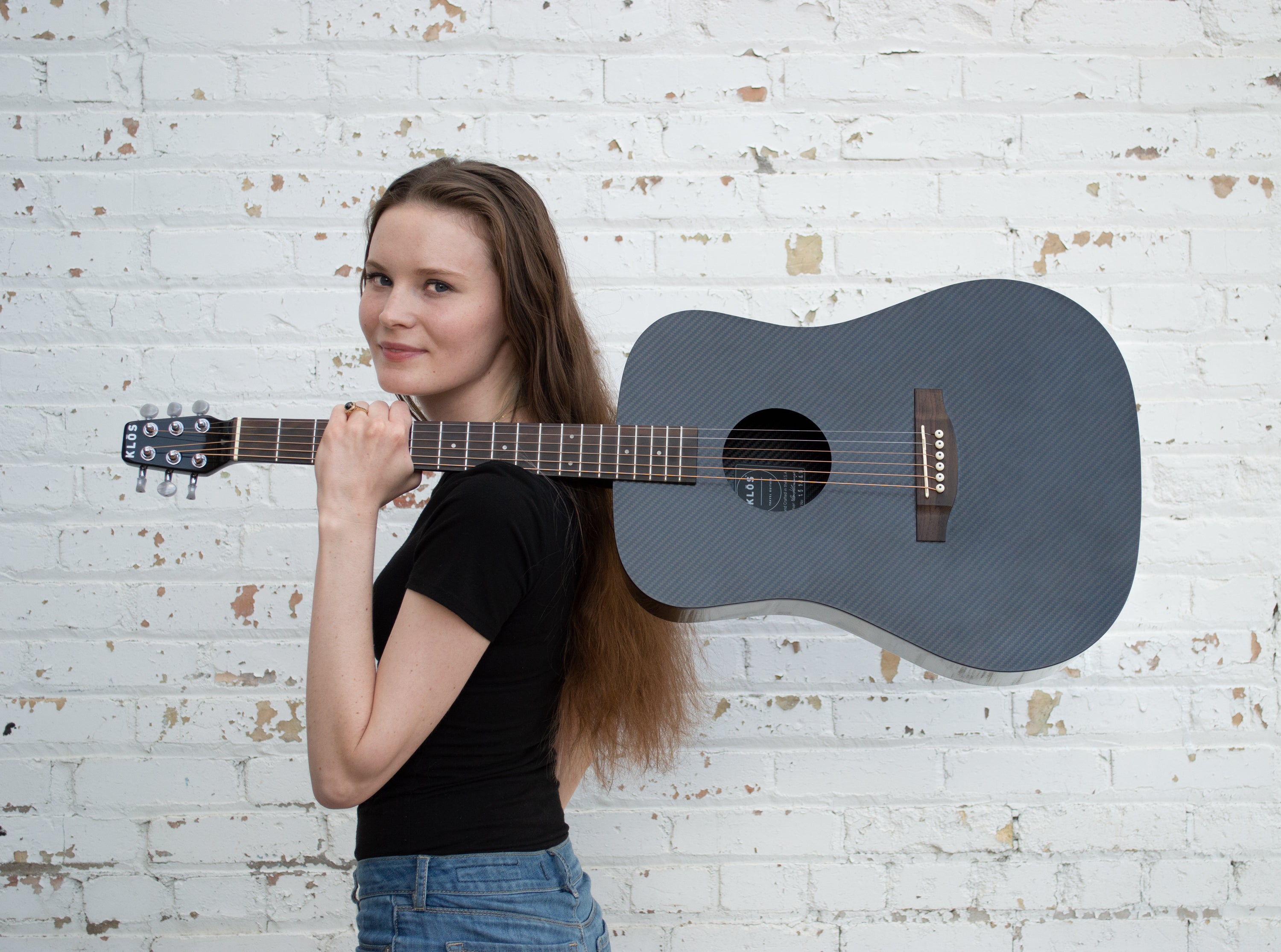
That is the encouraging takeaway for a new player. The mandolin has more range than its size suggests, and the path these players walked, learning the tradition and then adding something personal, is still open. A stable, well-set-up instrument helps you put in the hours that any of these careers require. A carbon-fiber KLŌS mandolin holds its tuning through long practice sessions and travel, so more of your time goes to playing and less to fussing with the instrument.

Pick two or three names from this list, find their recordings, and listen closely. Every one of them started as a beginner too.




Leave a comment