


If you have spent any time spec'ing a guitar or shopping for a replacement neck, you have run into the fretboard question. It is one of the most visible parts of the instrument, the strip of wood your fingers actually live on, and the material under your fingertips shapes how the guitar feels and, to a smaller degree, how it sounds.
Ebony is the dark horse of that conversation. Players talk about it in reverent tones; it shows up on expensive instruments, and it carries a reputation for being the smoothest, snappiest surface you can play. Here is what is real about it, what is hype, and how it stacks up against the other usual suspects.

What ebony actually is
Ebony is the wood from trees in the Diospyros family, and the part guitar makers care about is the dense, dark heartwood. It is one of the hardest, heaviest tonewoods in regular use. Drop a block of it in water and it tends to sink, which tells you most of what you need to know about its density.
There are two kinds you will see on guitars. Gaboon ebony, sometimes called African ebony, is the classic jet black material people picture when they hear the word. Macassar ebony comes from Southeast Asia and looks completely different, with rosy brown and yellowish streaks running through the dark base, almost like marble.
The tonal difference between the two is minor to the point of being academic. Macassar is a touch denser and heavier, which makes it slightly more stable and a little less prone to chips and cracks. For most players, the choice comes down to looks: solid black or striped.
How an ebony fretboard feels and sounds
The thing players notice first is the surface. Ebony is hard and naturally smooth, almost waxy to the touch, so bends and fast runs feel slick under the fingers. Because the pores are so tight, the board does not need a grain filler to feel polished, and a lot of people prefer playing it raw and unfinished.
That hardness also shapes the attack. Ebony tends to produce a bright, snappy note with clear definition, which is why it shows up so often on high end electrics and on acoustics where players want articulation. The effect is subtle. Fretboard wood matters far less to overall tone than the body, the strings, or the pickups, so treat any claim of a dramatic tonal transformation with healthy skepticism.
For comparison, a rosewood fretboard is softer and more open-grained, which gives it a warmer, rounder voice and a slightly grippier feel. Maple sits at the other end. A maple fretboard is usually sealed with a finish, so it feels fast and glassy and reads even brighter than ebony. Ebony lands as the dense, dark option that combines maple's snap with a more organic, oiled feel.
Ebony versus rosewood, maple, and pau ferro
Most fretboard materials cluster into a few families, and knowing where each one sits helps you read a spec sheet. Rosewood is the warm, forgiving middle ground and the most common board on the planet. Maple is the bright, sealed surface that defines the classic bolt-on electric sound. Ebony is the dense, fast, articulate end of the spectrum.
There is also pau ferro, sometimes called Bolivian rosewood, which has become a frequent stand-in for traditional rosewood on production guitars. It is harder and tighter grained than rosewood, so in feel and brightness, it actually sits closer to ebony than to the wood it replaced.
When people debate ebony vs rosewood, they are usually really debating feel and look more than sound. Ebony gives you that slick, jet black or marbled surface and a crisp attack. Rosewood gives you warmth, a softer touch, and a brown grain that ages handsomely. Neither is better. They are different tools for different players.
The care side nobody mentions at the counter
Here is the part that gets glossed over in the showroom. Ebony is a natural wood, and like all wood fretboards, it lives and breathes with the room around it. In dry winter air, it loses moisture, and an unfinished ebony or rosewood board can dry out to where the grain looks gray, and the fret ends start to feel sharp where the wood has shrunk back from them.
The fix is conditioning oil, usually applied when you change strings, maybe a couple of times a year, depending on your climate. It is not hard, but it is a recurring chore, and skipping it for too long in a dry house can lead to checking or cracks. A maple fretboard sidesteps the oiling because its finish seals it, though that finish brings its own wear over years of play.
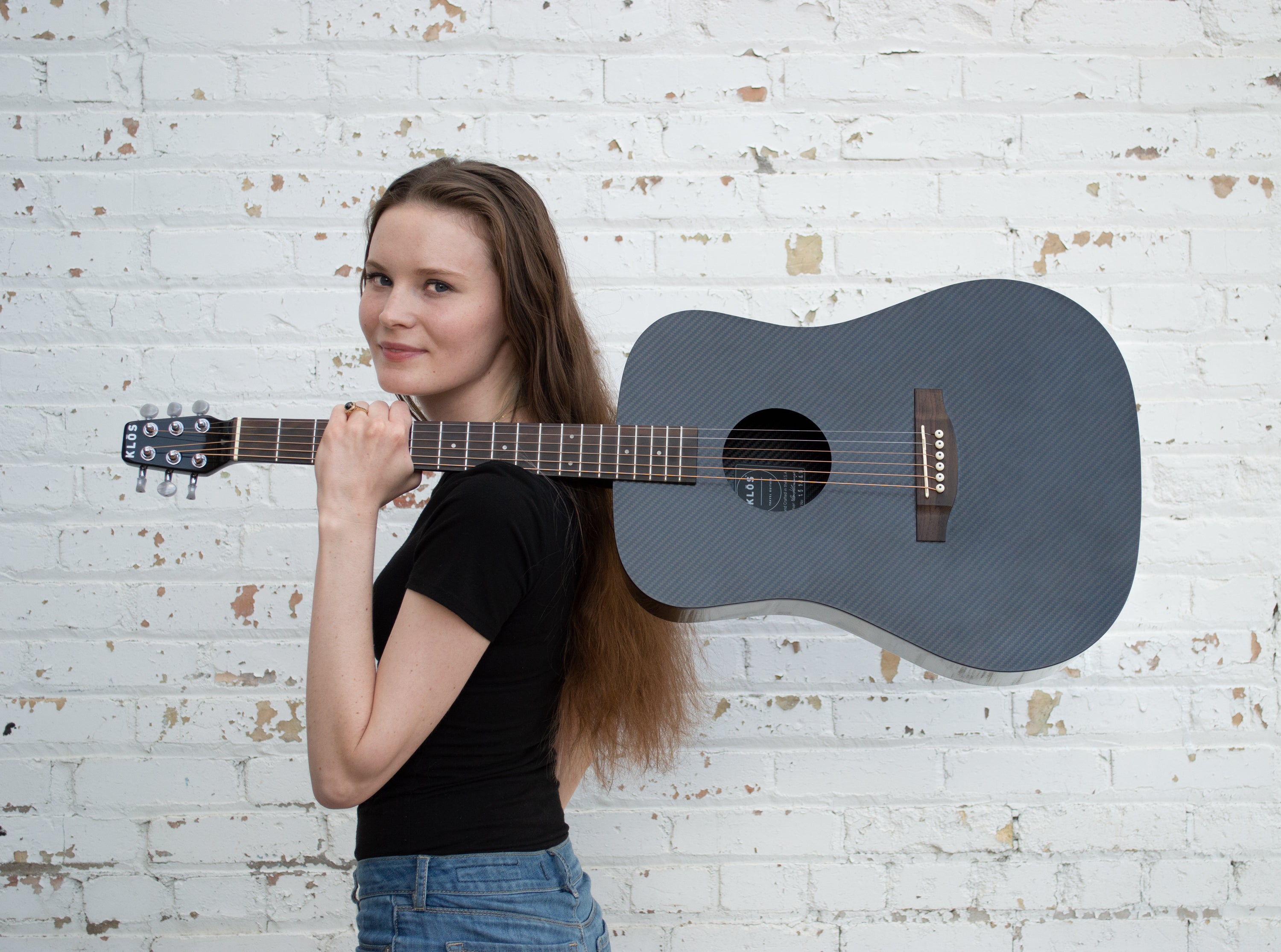
This is also where the material conversation has been quietly expanding. Carbon fiber has entered the fretboard and neck world as a genuine option, and it behaves nothing like wood when it comes to humidity. The KLŌS F-Series Electric Neck is a good example. It is a Fender-compatible bolt-on built to drop onto a Strat, Tele, or Jazzmaster body, and its playing surface never dries out, never needs conditioning oil, and does not move when the seasons turn. It ships PLEK'd from the factory with stainless steel frets, so the setup is dialed in, and the fret wear that eventually shows up on softer materials is far slower to arrive.
To be clear, that surface is carbon fiber, not ebony. It will not give you the look of a black or streaked wood board, and if a wood grain is what you want, ebony delivers that in a way no synthetic can. The trade is dimensional stability against natural material and traditional aesthetics, and which one wins depends entirely on what you value.
A word on where ebony comes from
If you care about the supply chain, ebony is worth a closer look. Gaboon ebony has lost more than half its population over the last three generations and now sits on the CITES list of protected species. Macassar is not CITES listed but appears as vulnerable on the IUCN Red List for similar reasons.
There is a wasteful history behind the jet black ideal, too. For decades only about one in ten ebony trees was found to have a fully black core, and cutters would fell a tree to check the color, then leave the streaked ones to rot in the forest because the market only wanted solid black. Taylor Guitars bought a mill in Cameroon called Crelicam and began accepting and selling that streaked ebony, even putting it on their high end models, while raising mill wages and funding replanting work. The upshot for buyers is simple: a streaked ebony board is mechanically identical to a jet black one, and choosing it puts less pressure on the forest.

So which board should you pick?
If you want a slick, fast surface with a bright attack and a dark, striking look, ebony earns its reputation. If you want warmth and forgiveness, rosewood or pau ferro are the move. If you want the brightest, most sealed feel of all, maple is your board.
And if your real frustration is the seasonal cracking, the oiling, and the fret ends that get sharp every winter, that is exactly the problem a carbon fiber neck was built to remove. Take a look at the KLŌS F-Series neck if you want a Fender ready bolt on that stays put no matter what the weather does. Whatever you choose, you now know what the spec sheet is actually telling you.